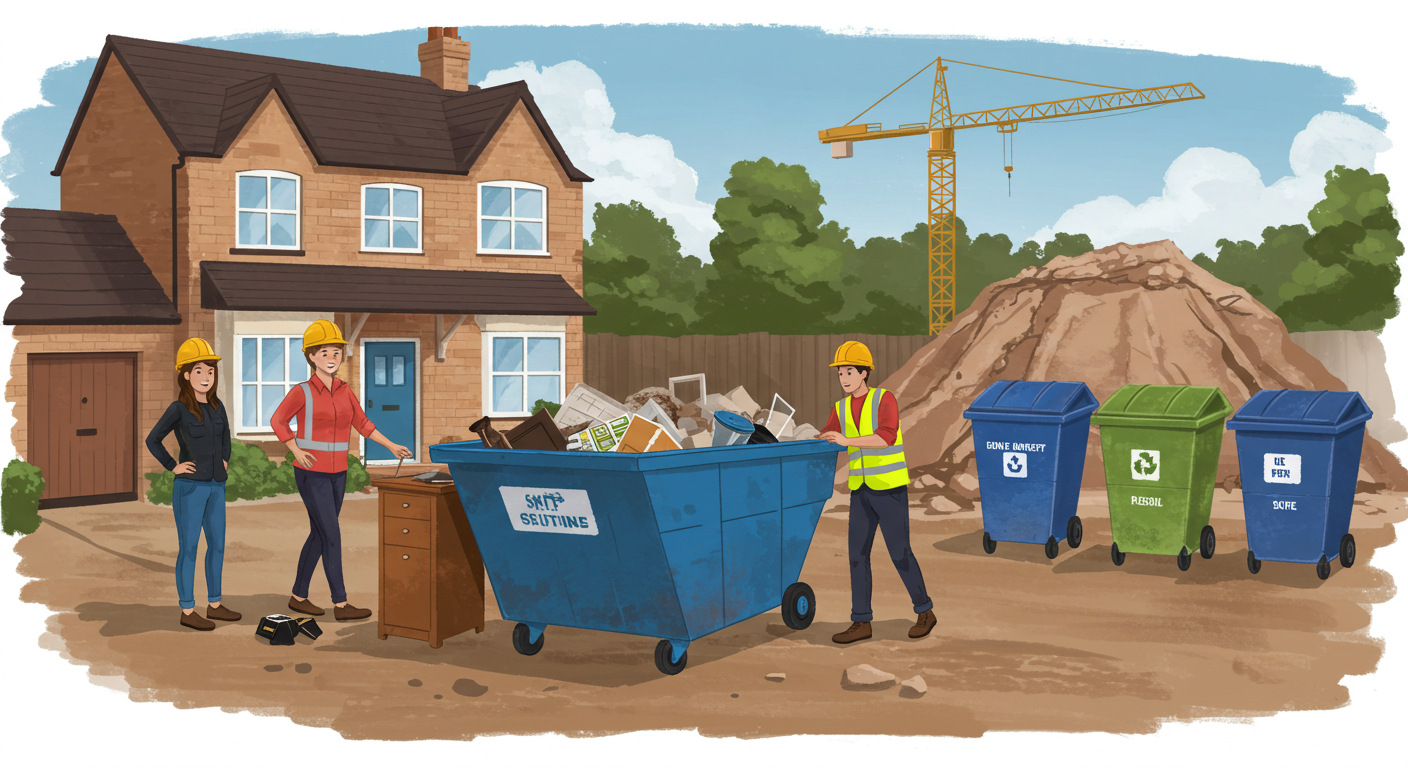
Full-Service Waste Management: From Delivery to Disposal
Posted by on 2025-05-13
Full-Service Waste Management: From Delivery to Disposal
In our fast-paced world, the way we handle waste is more crucial than ever. We often take for granted the processes behind the scenes that ensure our communities remain clean and sustainable. Full-service waste management (from delivery to disposal) plays a pivotal role in maintaining this delicate balance. It encompasses everything from the initial collection of waste to its final disposal, ensuring that each step is efficient and environmentally sound.
At the heart of full-service waste management lies a well-coordinated system designed to address various types of waste—be it household garbage, industrial refuse, or hazardous materials. The process begins with delivery (the collection phase), where specialized vehicles navigate neighborhoods and industrial areas to gather waste. These vehicles are equipped with advanced technology to maximize efficiency and minimize environmental impact (reducing emissions is a key concern).
Once collected, the waste undergoes segregation at designated facilities. Here, recyclable materials are separated from non-recyclables—a critical step in reducing landfill burden and promoting sustainability. Recycling not only conserves resources but also decreases pollution levels associated with manufacturing new products! This phase underscores the importance of community participation; by separating recyclables at home, individuals can significantly enhance the effectiveness of this process.
The journey continues as organic waste is directed towards composting facilities. Composting transforms biodegradable material into nutrient-rich soil additives, benefiting agricultural practices and reducing methane emissions from landfills. Meanwhile, non-recyclable and non-compostable wastes are subjected to energy recovery processes or directed safely to landfills designed with environmental protection measures in place.
One cannot overlook the role of innovation in modern waste management systems. Technological advancements have revolutionized how we process and dispose of waste—from smart bins that alert when they’re full to sophisticated sorting machines employing artificial intelligence for precision separation. Such innovations not only streamline operations but also contribute significantly towards achieving zero-waste goals.
Moreover, full-service waste management is increasingly intertwined with public policy and education initiatives aimed at fostering responsible consumption habits among citizens. Governments worldwide implement regulations encouraging businesses and households alike to reduce their carbon footprint through sustainable practices—think reusable packaging or incentive programs for reducing single-use plastics.
Education plays an equally vital role; when people understand why proper waste disposal matters (and how they can contribute), societal change follows naturally. Community workshops, school programs, and media campaigns all serve as effective platforms for disseminating knowledge about sustainable living practices.
The comprehensive approach offered by full-service waste management ensures that every stage—from delivery through disposal—is handled responsibly. By integrating cutting-edge technology with robust policy frameworks and active community engagement, it sets forth a model for other sectors grappling with sustainability challenges.
In conclusion (as we reflect on these intricate processes), it becomes clear that full-service waste management is much more than simply "taking out the trash." It's an essential component of urban living that supports both environmental health and economic vitality by turning potential problems into opportunities for growth—and all while keeping our planet cleaner for future generations!